Medical exam practice
OSCE study
I built a place for medical students to rehearse patient interviews in European Portuguese, then see what they uncovered and what they missed.
- My role
- Product engineering
- Clinical content
- Authored and curated by a medical student
- Status
- Launched · active development
Practise the conversation, not just the answer
An OSCE—an Objective Structured Clinical Examination—is a practical medical exam. In a patient-interview station, students have to gather the relevant information through conversation, not select an answer from a list.
OSCE study lets them choose a clinical case and interview an AI-simulated patient in European Portuguese. They decide what to ask and how to follow up. Once they finish, they get structured feedback on the details they elicited and the ones they missed.
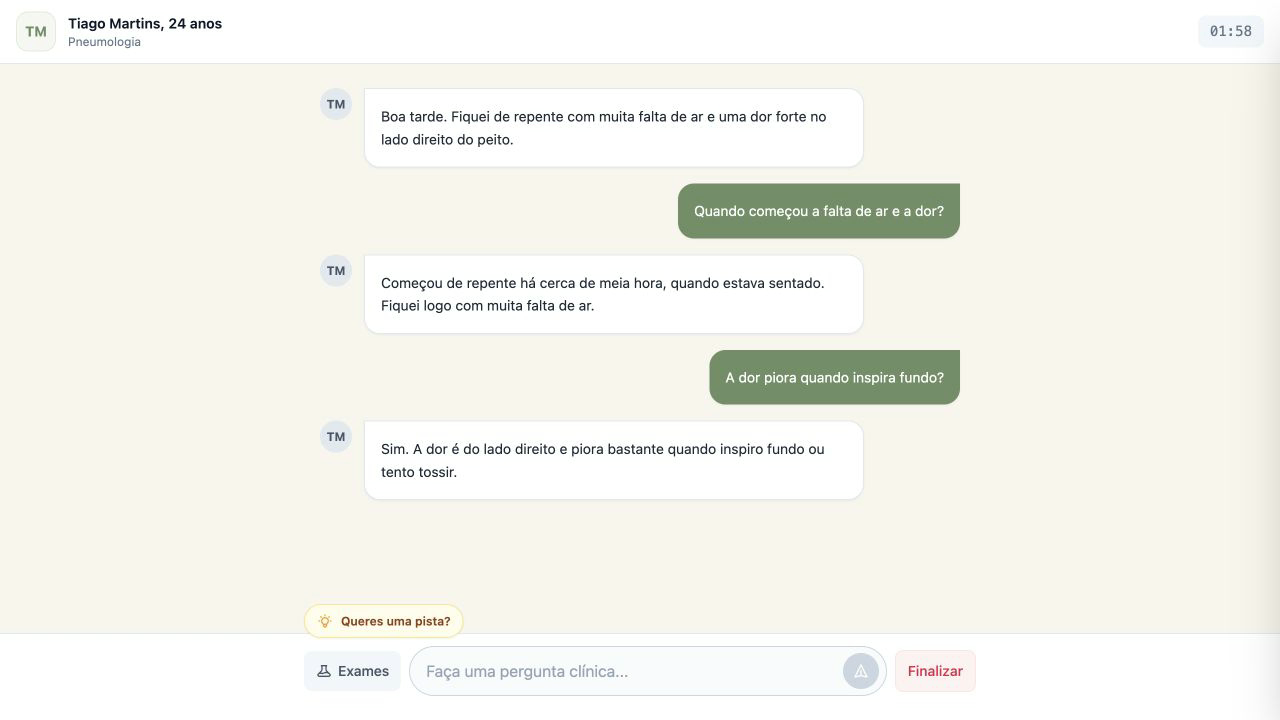
A patient during practice. An evaluator afterwards.
I kept those responsibilities separate. The patient receives the case details, but not the diagnosis or marking criteria: it plays the person being interviewed, not the examiner guiding the student towards an answer.
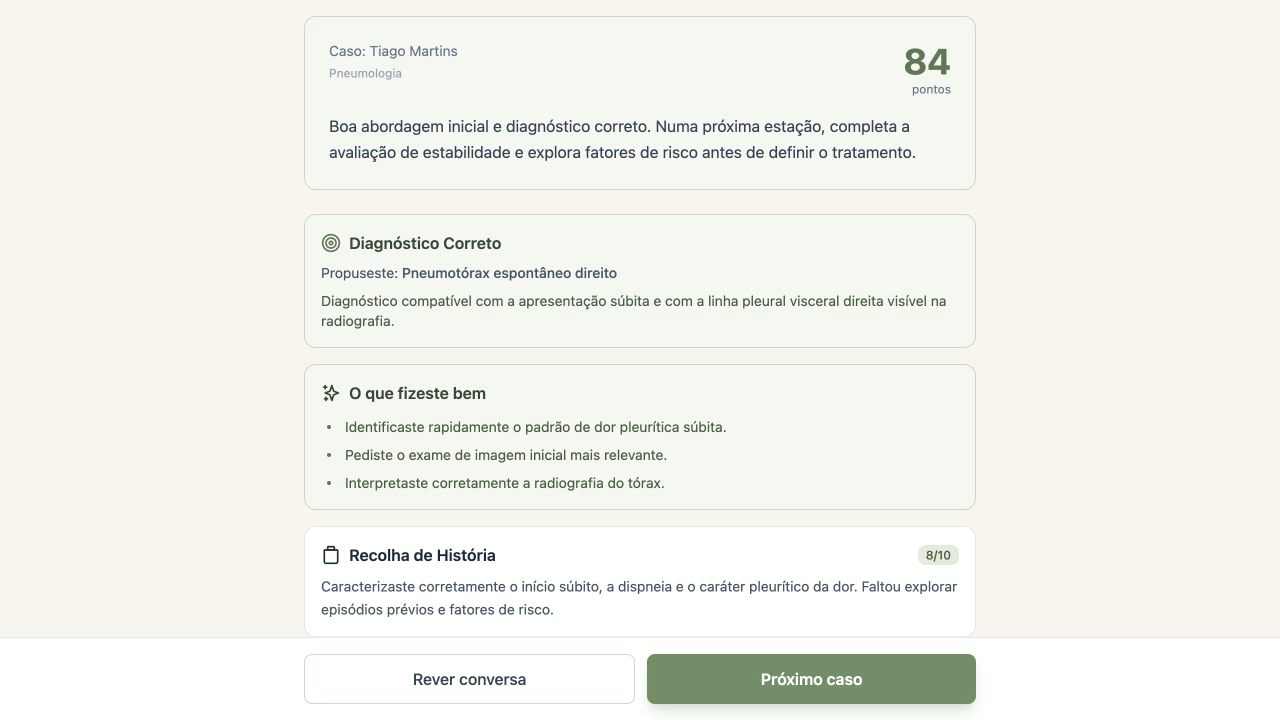
A separate evaluator reviews the interview against the case criteria. It recognises clinically equivalent questions, so students can ask in their own words rather than reproduce a prescribed phrase.
The feedback brings the diagnosis, strengths and gaps together. In this demo, the student identifies the diagnosis but still needs to explore previous episodes and risk factors: getting the answer right is not the same as completing the interview.
Clinical authorship and product engineering
I designed and built the product with a medical student who authors and curates the clinical cases. I built an editor where my collaborator can revise cases and attach exam images independently, keeping clinical content in their hands.
In June 2026, the library held 297 cases across 27 specialties, alongside multiple-choice revision and exam images.
Students can try a session before registering and carry their practice history into an account. I built the onboarding, subscriptions and case-feedback tools around that practice experience.